
The IQ Bell Curve: Why Most People Cluster Around Average (and Why That's Normal)
If you've ever seen an IQ chart, you've probably noticed it looks like a hill: lots of people in the middle, fewer as you move toward the extremes. That's called a bell curve, and it shows up all over nature and human traits—height, reaction times, and many measurable abilities tend to cluster near an average.
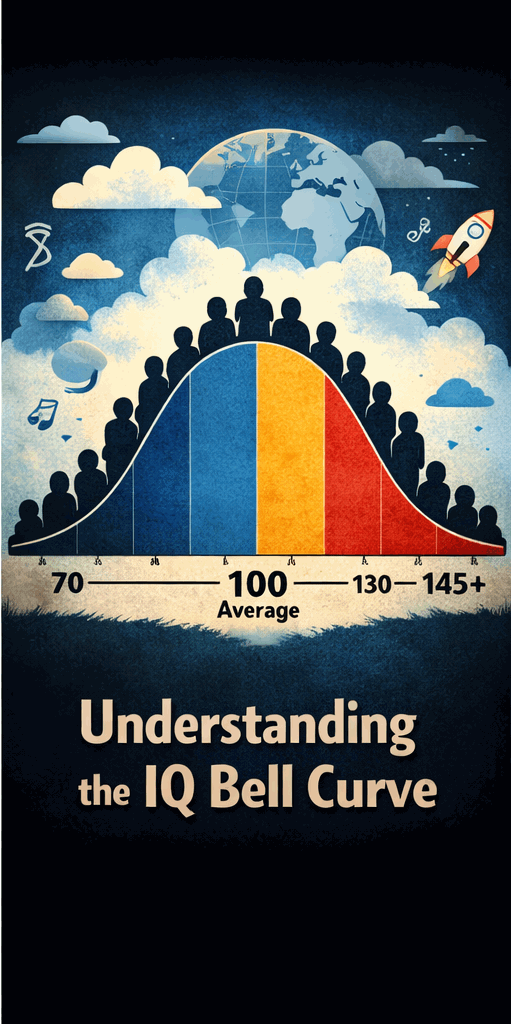
IQ tests are designed so that the average score is set to 100, and most people land close to that number. Scores far above or below the middle are rare, not because people don't work hard, but because the math of large populations naturally creates "thin tails" at the extremes. Small differences in many underlying factors add up, and the most extreme outcomes happen less frequently.
This is also why extremely high scores feel "legendary." They are statistically uncommon. But rare doesn't automatically mean "better at life," and average doesn't mean "limited." Many real-world achievements depend more on consistent effort, learning, collaboration, and experience than on raw puzzle performance.
The bell curve can actually be encouraging. It reminds you that if a question feels hard, it's hard for almost everyone. And if you improve over time, you're doing something many people never attempt: training the mental habits that support focus, patience, and structured thinking.
On IQ Ladder, the difficulty ramps up on purpose. The goal isn't to make everyone fail—it's to create a ladder where every step teaches you something, and where reaching the top feels genuinely earned.