
Train Your Mind Like a Muscle: Practical Benefits of Puzzle-Based Thinking
Most people accept that physical fitness improves with training, but they underestimate how adaptable the mind can be. When you regularly challenge your brain—especially with tasks that require attention and flexible thinking—you build mental habits that transfer into everyday life: clearer decisions, better focus, and more confidence when facing complexity.
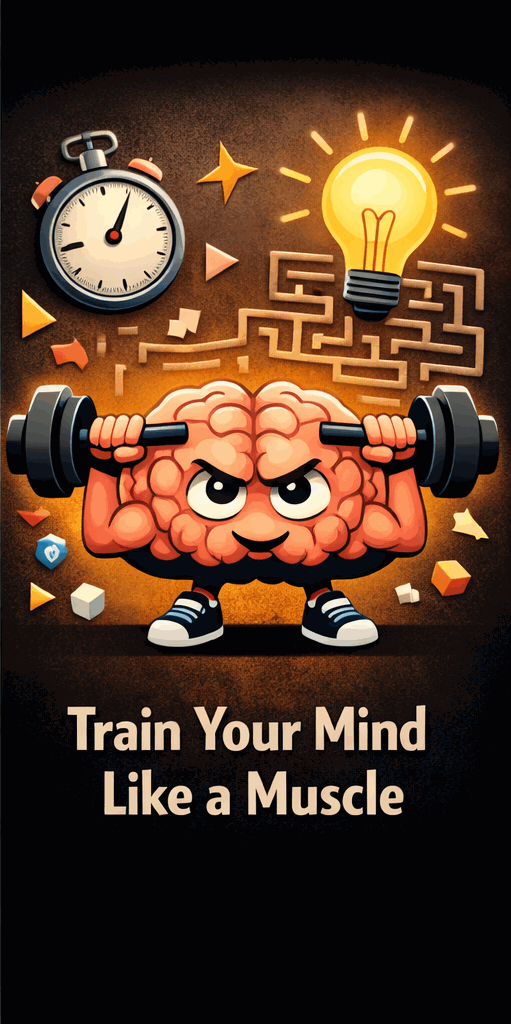
Puzzle-based challenges are especially good at training a few key skills. First, they train pattern recognition: spotting what changes and what stays the same. Second, they train working memory: keeping multiple pieces of information in mind at once without losing track. Third, they train cognitive flexibility: switching strategies when your first approach isn't working.
These aren't just "test skills." They show up when you're debugging a problem at work, planning a project, learning a new language, or making a decision under pressure. The more comfortable you become with structured problem solving, the less likely you are to panic when something feels complicated.
The best training is consistent and slightly uncomfortable—not exhausting. A few minutes a day is often better than one long session per month. Over time, you start to notice subtle improvements: you read more carefully, you catch patterns faster, and you waste less time repeating the same mistakes.
That's the spirit of IQ Ladder. It's not about proving you're smart. It's about sharpening your thinking—one step at a time—and enjoying the moment when a "hard" puzzle suddenly makes sense.